“Take your heart once again and lead it by the hand.”
~Richard Baxter
Sometimes I feel like a corgi dog treading water. I’m feigning composure and dignity while frantically pedaling pint-sized legs to keep my head from submerging.
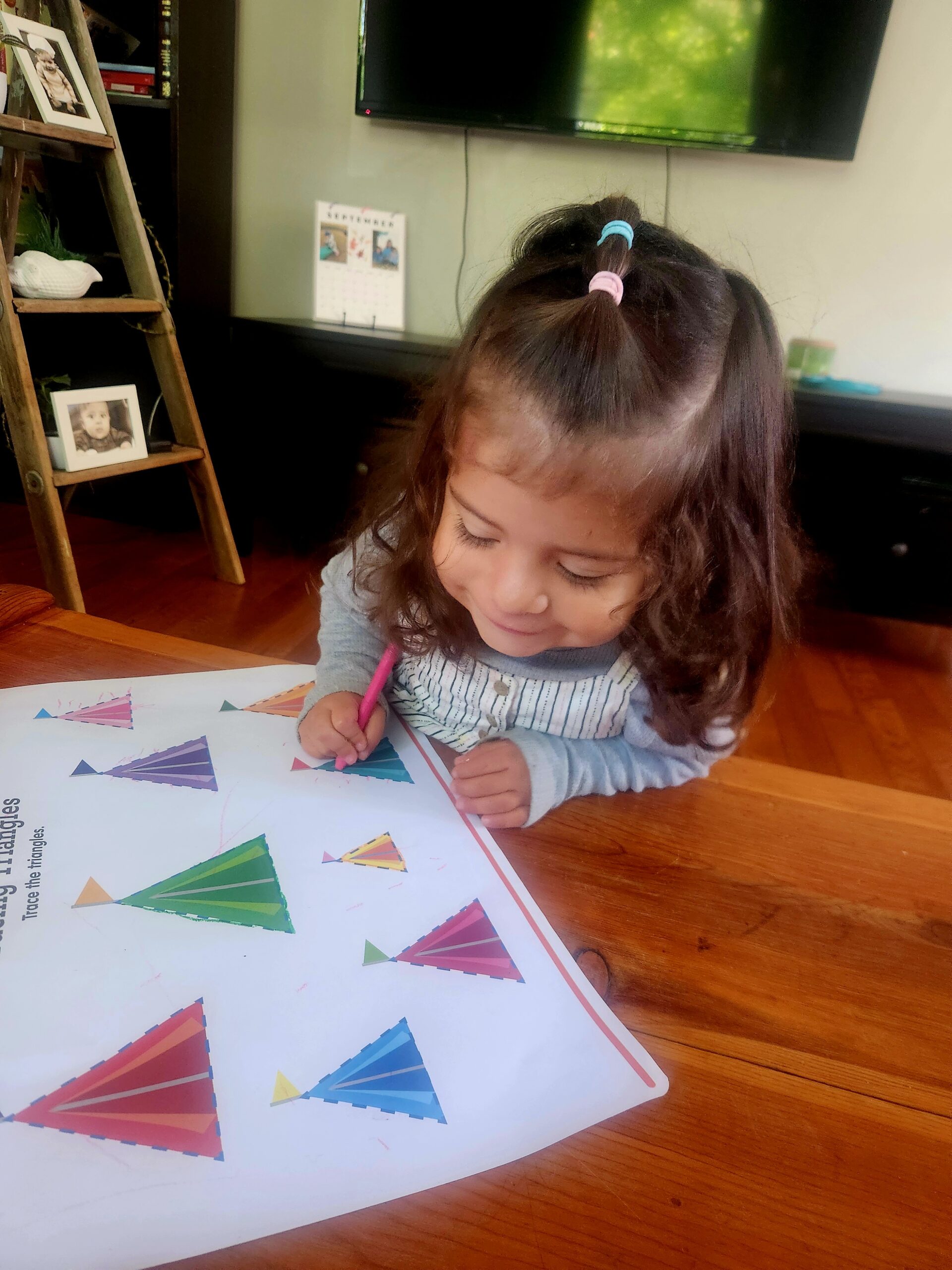
Every day, I try to map out some time to be with my girls. Not just physically be beside them, but give them my full undivided attention without a smartphone or an agenda. It doesn’t really matter what we do. Whether we accessorize the dolls, create an anthill that the ants will never find, or lay on our backs and trace dinosaurs in the clouds, these fleeting moments often form the most precious memories of my day.
However, occasionally the corgi sneaks into the water, and my mind drifts to the ground beef I should have pulled out of the freezer an hour ago. Which reminds me of the time my client discussed how hard it is to be vegetarian in a large Italian family. And then I remember I need to write five work emails that I probably should have sent yesterday. Before I know it, the corgi has paddled into the deep end, and I am miles away from the two little humans directly in front of me.
Sometimes, in the middle of these moments, one of the girls will take my hand and show me a simple miracle. A cloud that looks like a dancing t-rex. A little red ant scurrying suspiciously around the man-made hill. A doll wearing her dress backward and her panties on top of her head. And somehow, I feel the tight ball of anxiety dissolve and slowly give way to wonder.
The girls never order me to try harder to be present with them. They don’t inform me that I’m silly for trying to control things that are uncontrollable. They simply take my hand and invite me to a different perspective.
Have you ever imagined taking your heart by the hand and leading it? I grew up in a generation where every Disney princess sang the virtues of following your heart. My children are growing up in a generation that is highly emotionally literate, with feeling faces and charts popping up in books, flashcards and classroom walls. Perhaps the thought of leading your heart feels strange, or even cold.
I believe we can lead our hearts in damaging ways, becoming dictators and repressing the beautiful nuances God has woven into them. In misguided attempts to keep them safe, we might coral our hearts into airtight boxes or straitjackets, desperately attempting to filter anything that exceeds moderate happiness, mild sadness, or feigned curiosity.
God made us in His image, and this includes our hearts. Like the rest of creation, they are incredibly complex. Welsh has a word for the specific grief and sadness felt when you are homesick for your homeland. Jaysus (Indonesian) has a word that captures the feeling that makes you laugh at a really badly delivered joke. The English vocabulary alone has approximately 3000 emotion words.
Our hearts were not made to be stuffed away. But they were also not designed to be leaders.
Like every other beautiful, intricate part of creation, the human heart has been distorted and devastated by sin. The prophet Jeremiah paints a bleak image of a heart left to its own devices:
“The heart is deceitful above all things and beyond cure. Who can understand it?” (Jeremiah 17:9)
Anger, frustration, excitement, grief and longing are not inherently wrong or bad. I imagine that Jesus Himself experienced these emotions vividly while on earth. However, they can lead us onto rollercoasters, down dark holes, and into lonely castles.
What could it look like to take a heart by the hand and point it to the Word of God? I can turn my consuming sadness to face “the God of all comfort,” (2 Corinthians 1:3) my deep despair to behold a “Living Hope,” (1 Peter 1:3) and my spinning anxiety to focus on “the Rock that is higher than I,” (Psalms 61:2).
Richard Baxter highlights that this is not a one-and-done kind of thing, like Frodo reaching the top of Mount Doom and looking down on the lake of burning fire. He invites us to take our hearts by the hand once again. Once again after another triggering conversation, once again after another humbling parenting moment, and once again after another lonely night.
When I read the Psalms I imagine David to be a living embodiment of “once again.” He leads his heart back to God’s truth over and over, in times of joy, pain, sadness and confusion. And this process creates a deep love for God’s Word. In Psalm 119, he uses approximately 2,500 words to sing its praises. But after countless “once agains,” David also observes that the very anatomy of his heart is changing. I’d like conclude with this beautiful statement in Psalm 119:32:
“I shall run the way of Your commandments, for You will enlarge my heart.”