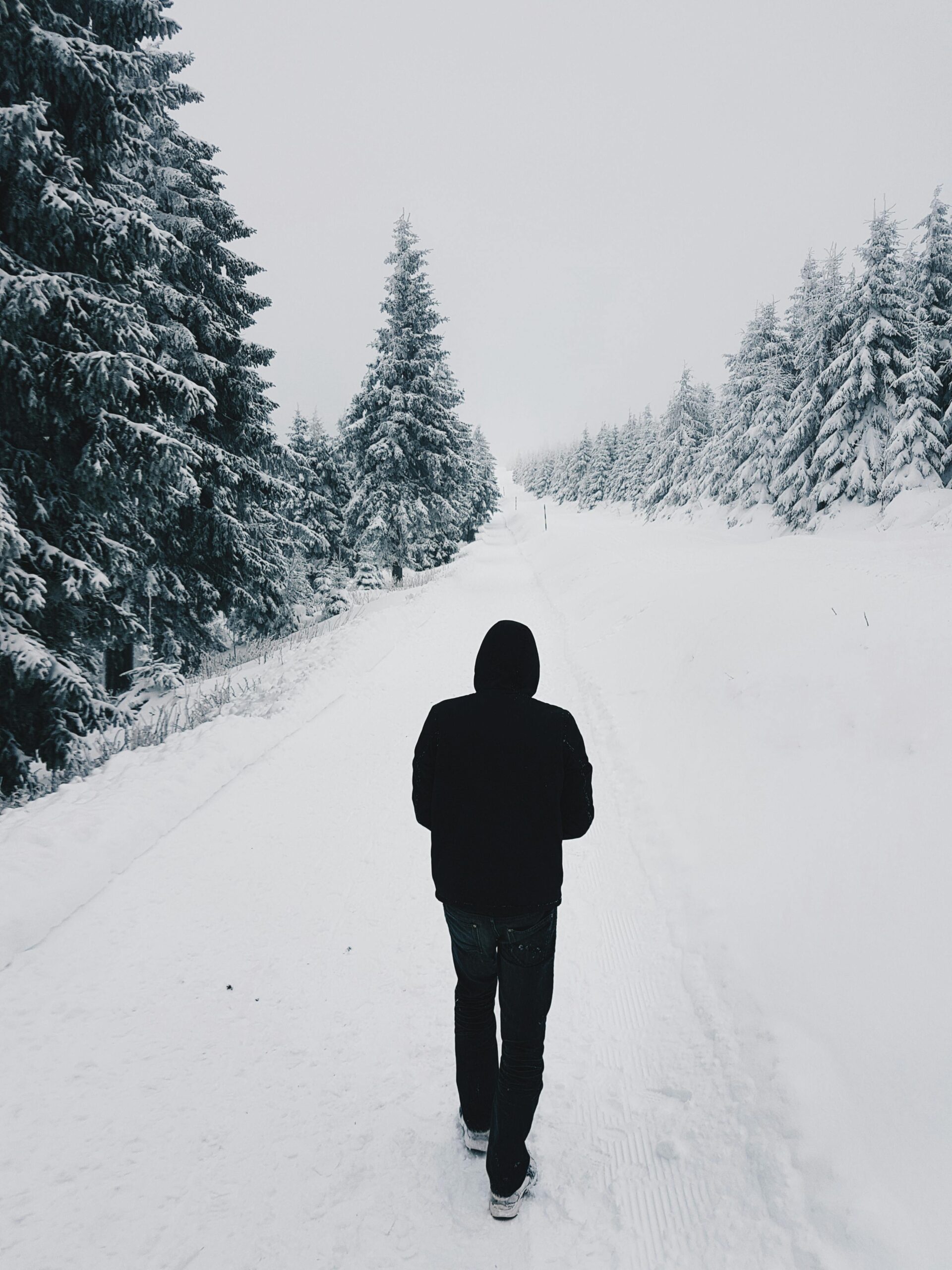
“Everything can be taken from a man but one thing: the last of human freedoms- to choose one’s attitude in any given set of circumstances.”
-Viktor E, Frankl
I have often viewed November and February as dreary placeholder months. Both are dark and cold, but somehow feel distinctly different. November is a fog-covered bridge connecting autumn and Christmas; the lingering smell of fallen leaves and distant haze of Christmas lights add a touch of warmth and nostalgia to the gloom. February on the other hand, is a gradual icy slope, slowly meandering from winter to early spring. It is entirely possible to feel that progress is slowly being made, and then slide suddenly backwards into a blizzard or polar vortex. At times it becomes difficult to see the top and easy to lose faith that the hill will ever end.
Have you ever walked through a February season, the kind where clouds obscured the sun, not just for an hour or even a day, but for a string of days, weeks or even months? Maybe it was an external life circumstance that you didn’t choose and couldn’t foresee. Or perhaps an internal battle, so persistent and difficult that it almost felt tangible. Over the past month, I have sat with several clients and dear friends that described deeply challenging life circumstances that just would not change, no matter how much prayer, discipline, or passion they employed.
One friend described her situation using the Greek Titan Prometheus. As the myth goes, he defied Zeus by stealing fire from Olympus and giving it to humans. As punishment, he was bound to a rock to have an eagle eat his liver every single day for eternity. Overnight it would regenerate and grow back, only to be eaten again the next day. How do we keep “regenerating” or holding on to hope when suffering doesn’t come with a clear finish line? Whether it’s chronic illness or chronic heartbreak, how do we navigate a kind of darkness that just seems to linger? Is it inevitable to eventually reach the same conclusion as The Beatles, that “happiness is a warm gun?”
While struggling through some of these questions, I found inspiration from Henrik Ibsen, a Norwegian playwright that spent many months literally living in the dark. In 1850, he popularized the term friluftsliv, or literally “open-air living.” In modern Nordic culture, this has simply come to mean creating every opportunity to be outside regardless of the season. Throughout the dark and cold months of winter, friluftsliv enthusiasts continue to enjoy nature by biking to work, going for a jog through the forest, or relaxing in a lakeside sauna. Apparently there is a Swedish saying that claims: “there’s no such thing as bad weather, only bad clothes.”
If the term friluftsliv had been invented in 1000 B.C.E, I imagine that David could have used it as a heading for Psalm 143. He certainly walked through several prolonged February seasons. Instead of travelling or pursuing an elite education, he spent a good part of his 20s either on the run or fighting for his life. He does not hold back when expressing his internal struggle:
“He has crushed my life to the ground; He has made me dwell in darkness, Like those who have long been dead. Therefore my spirit is overwhelmed within me; My heart is distressed.” (Psalm 143:3-4)
In the following verses, David uses striking language to describe his posture as he turns to God:
“I spread out my hands to You” (vv. 6) and “I lift up my soul to You” (vv. 8). The most instinctive response to pain is to retreat, to go downward and inward. We adopt this posture to protect ourselves from more pain by any means possible. When reading the psalms, I wonder if David practiced walking with God through so many dark seasons, that it became almost automatic to adopt the most open and vulnerable posture imaginable in times of pain. He knew, in a deeply experiential way, that he would be met with a lovingkindness that was better than life (Psalms 63:3) and a steadfast love that endures forever (Psalms 136:2).
We naturally like to label experiences and seasons as good or bad, positive or negative. I wonder how David viewed these February seasons in hindsight. Were they defined by darkness, uncertainty and pain? Or by a posture of surrender that kept leading him back to the greatest love and security he would ever know? In his book The Way of Beatitude, Franciscan Priest Casey Cole highlights the distinction between conditions that people encounter and the way people respond to them: “Sorrow has the ability to deaden the mind and extinguish the spirit.” He goes on to write that it can also foster “vulnerability, empathy, sorrow, tears; [things] that make us more relatable to others and far more like God.” Perhaps a reframe of the Swedish saying could be: There is no such thing as wasted pain, only wasted perspective.
The highest, most transformative act of love in the history of the world transpired in a place of utter darkness, excruciating pain, and complete loneliness. When we walk through even a shadow of these things over time, we have a unique ability to know Jesus in a more intimate way. Although challenging seasons rarely come with a plot synopsis or spoiler alert, they always provide a guide that can lead us directly back to the foot of the cross. Joni Eareckson Tada writes these words: “learn to view your pain as your private meeting place- a hard but personal space where you will know Christ’s most amazing love for you beyond a doubt.” (The Practice of the Presence of Jesus).
During Covid, a coworker introduced me to a youtube channel run by a train engineer that featured many hours of live train footage through the fields and mountains of Nordic regions. I would play it in the background while I read, wrote and cooked. During weeks that I was not able to see my family and friends, I’d imagine what it would be like to travel the world. Thinking back to the ruggedly breathtaking landscape, I can imagine why so many people adopt frilufsiv. The comfort of retreating into a warm home simply cannot compete with the magnificence of the mountains and the beauty of the northern lights. It can certainly feel hard to do anything but retreat in a dark season. But I wonder how many ways a change of posture could display the beautiful, breathtaking, and eternal love of Christ.