Last summer, a gang of deranged squirrels decided to make themselves at home in my yard. If you are imagining cute little nests and acorns hidden under the porch, you are radically mistaken. The critters dug giant holes in the front lawn for no apparent reason. They chewed clean through my brand-new porch lights. I think I could have found a way to forgive these wrongs had they had not decided to go one step further and decimate all my climbing sweet pea plants. I battled the delinquents for most of the summer, planting and replanting seeds in a score of hidden and creative locations. Some were brutally ejected from the soil before they even had a chance to grow. Others managed to sprout tender green vines. I would carefully water them for a few days, invariably to find that the squirrel gang had snapped and left them dead on the ground in an act of senseless violence.
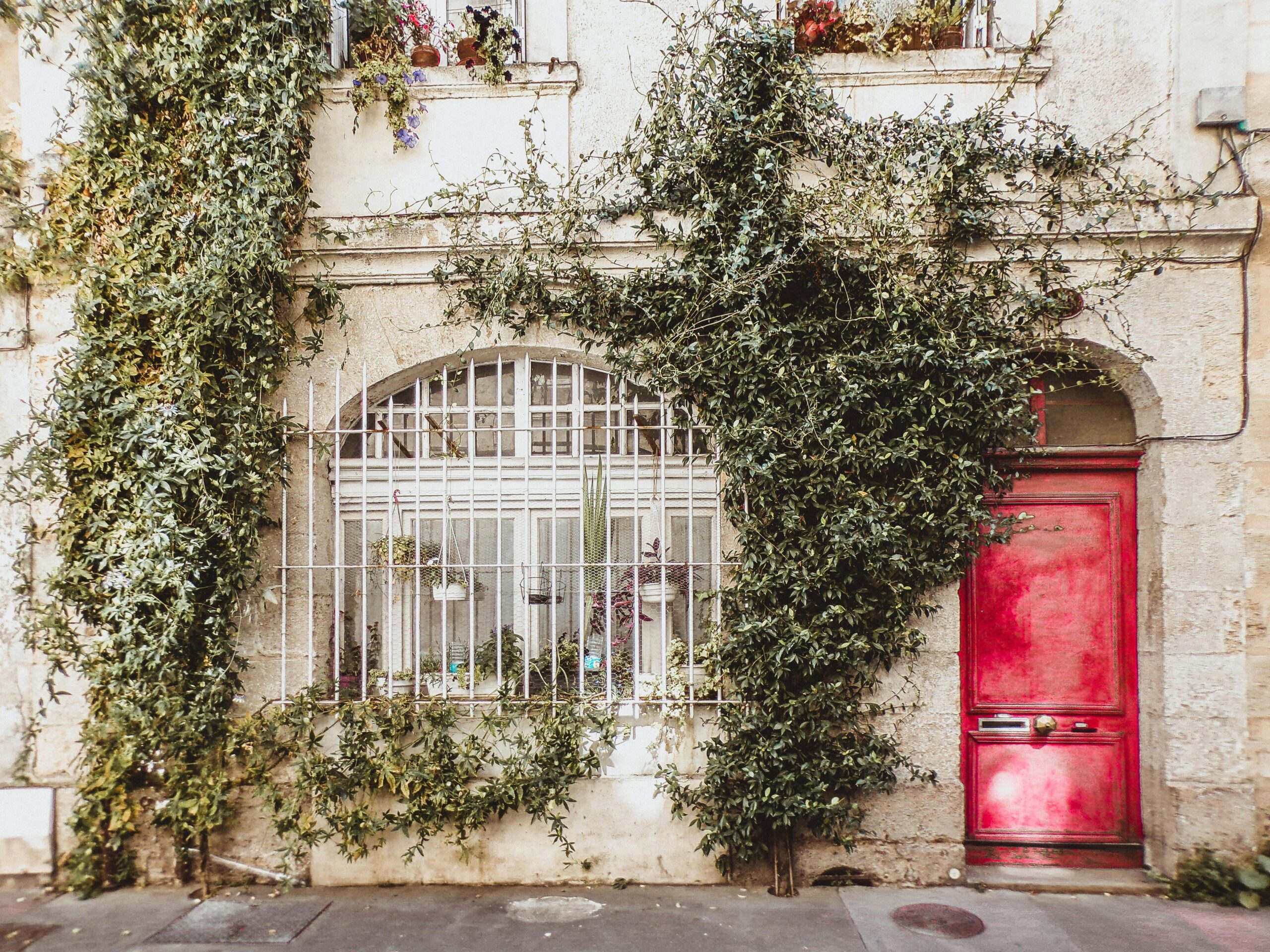
The struggle became deeply personal and every bone in my body hated having to concede defeat. I had to grieve my sweet peas, not just because they faced blatant discrimination, but also because I derive a lot of joy from a climbing plant. I just love the way it highlights the beauty of a simple boundary like a fence, and conversely how the fence gives the plant a stage to display its full glory. We cannot fully appreciate one without the other.
In Psalm 16:6, David writes: “The boundary lines have fallen to me in pleasant places; surely I have a delightful inheritance.” I have always been intrigued by these words. David not only took the time to become personally acquainted with his boundaries and limits, but actually seemed to take delight in them. If human limits were a stone wall, I imagine David sitting and admiring the way the grey and brown stones highlighted the surrounding greenery rather than looking for ways to escape or break it down.
Does it feel foreign to imagine a limit as beautiful? I have a complicated relationship with the word. In the past I certainly viewed it in a negative light; at best an inconvenience and at worst a sin. I grew up in a culture where limits were constantly painted as something to be conquered. Nike was constantly popping up on shirts and sweaters, telling me to “Just Do It.” Bruce Lee reminded me that “there are no limits, there are only plateaus.” The year I graduated from school, Katy Perry came out with Eye of the Tiger. Every time I heard her belt out the words “Rising up straight to the top/ Went the distance now I’m not gonna stop,” it suddenly felt possible to conquer every academic paper, essay and exam.
Throw into the mix a type A personality and healthy dose of Dutch stubbornness, I spent a wealth of time and energy trying to be the first person in the history of the world to prove human limits irrelevant. Obviously, I failed. I used every tool I could think of to try to blast, hammer and chip away at the fence. Sometimes I blatantly denied that it existed, usually ending up bruised and battered. However, in His grace God has slowly started to open my eyes to the beauty that unfolds when a limit is acknowledged and respected.
One limit that seems to be incredibly easy to bulldoze over is a weekly Sabbath. From the very beginning of time, God set a pattern in motion of working for six days and resting on the seventh. This limit can feel like a massive inconvenience. The world around us keeps moving at a dizzying place, a hundred things demand our attention at any given moment, and life is increasingly hard to pay for. There are so many reasons to argue that regular weekly rest is a luxury we currently cannot afford. However, if we are truly formed in the image of God, perhaps we cannot afford NOT to sabbath. We were made to work, sweat, run, explore, design, teach, think, and create. And we were also made to rest. To pause, enjoy and refresh.
In my experience, beautiful things grow when I respect this God-given limit. I realize that I am not God. It is incredibly freeing to realize that the world can keep spinning without me. That I can pause from fixing problems and putting out fires to appreciate beauty for the sake of beauty. John Mark Comer has a beautiful way of articulating this in his book Garden City: “For six days we wrestle with the world of space-the hard work of building civilization. But on the Sabbath, we savour the world of time. We slow down, take a deep breath, and drink it all in.”
Limits can also come in the form of perspective. As a therapist, I am regularly reminded of my limited experience and view of the world. I hear stories filled with joy, pain, confusion, hope, and heartbreak. Although I can relate and connect to the emotions, I have no idea what it is to live through these unique experiences of loss, trauma, injustice and discrimination. The more I recognize and acknowledge this limit, the more I am able listen with openness, curiosity and empathy. We can gain so much from taking the time to deeply listen to each other’s stories without instantly jumping to our own perspectives.
Novelist Frederick Buechner wrote: “Work is the place where your deep gladness and the world’s deep hunger meet.” Humans have an incredible capacity to learn and do a wide variety of things. However, I believe that God gave us all unique and limited gifting, that place where we can pour out something that gives us joy in a way that benefits the rest of the world. I could spend my life behind a computer analyzing tax files and conceivably be half decent at it after a LOT of time and effort. But I am convinced it would never bring me a fraction of the joy that I get from sitting on the floor, hands covered in homemade slime, having a heart conversation with a 12 year old client. Because in this moment I am using and fostering something unique that God put inside of me.
When I recognize and embrace my unique gifting, I give myself the permission to say no to things that fall outside of that. I also have greater capacity to appreciate other gifts that are uniquely different than mine. In his book You’re Only Human, Kelly Kapic highlights the beauty of this mindset in the context of the church: “Today I am caring for prisoners in jail; I am evangelizing the disenfranchised in Nepal; I am praying over the sick child in the hospital; I am serving the recovering victims of sex trafficking; I am standing against racial injustice; and I am caring for widows. And I am doing so much more. How? I am doing all of this because I am part of the living body of Christ.” Somehow, when many flawed and limited followers of Jesus come together over time and space and join their unique gifts, they form a body that is as whole as it is beautiful.
In a world that is moving at a frantic pace, it is so easy to approach human limits with annoyance or even shame. We tend to picture ugly “No Enter” signs, barbed wire, and yellow tape. However, I wonder how these images might transform if like David, we took the time to become acquainted and even friendly with our God given limits. Could it be that these “boundary lines” give space for some of the most beautiful things to grow?